Remember those moments as a kid, wishing your favorite cartoon characters could leap off the screen and play in your living room? Or perhaps you dreamt of battling mythical beasts right in your backyard? What once sounded like pure fantasy is now not just possible, but a rapidly evolving reality, thanks to Augmented Reality (AR) gaming.
AR gaming isn’t just a gimmick; it’s a revolutionary way to play that blends digital content with our physical world, creating experiences that feel truly magical. Think Pokémon GO, but that was just the beginning. This isn’t just about placing a digital character on your camera feed; it’s about sophisticated spatial understanding, real-time interaction, and an unprecedented level of immersion.
So, if you’ve ever wondered how these incredible experiences come to life, or perhaps you’re a budding developer eager to jump into this thrilling frontier, you’re in the right place. We’re about to embark on a comprehensive journey through the world of **AR gaming development**, uncovering the technologies, design philosophies, and creative spark that powers this digital-physical revolution. Get ready to explore the nuts and bolts of crafting realities that truly augment our own!
Read also : Immersive Gaming Technology
What is AR Gaming and Why is it Exploding?
At its heart, Augmented Reality (AR) gaming overlays digital information onto your real-world environment, usually viewed through a smartphone, tablet, or specialized AR glasses. Unlike Virtual Reality (VR), which completely immerses you in a simulated world, AR enhances your existing reality, making the world around you a part of the game. Imagine seeing virtual enemies lurking behind your actual couch, or collecting digital treasures scattered across your local park – that’s AR gaming in a nutshell.
The concept isn’t entirely new; early iterations involved simple overlays. However, recent advancements in mobile technology – more powerful processors, sophisticated cameras, and refined tracking algorithms – have propelled AR into the mainstream. The massive success of games like Pokémon GO, which famously brought Pikachu into parks and streets worldwide, proved the immense potential and public appetite for such experiences. This wasn’t just a game; it was a global phenomenon that showcased how AR could transform mundane environments into playgrounds.
Read also : Sensory gaming experiences
But it’s more than just a passing fad. The appeal of AR gaming lies in its accessibility and the unique sense of wonder it provides. Most people already own a device capable of running AR games – their smartphone. This low barrier to entry, coupled with the inherent ‘wow factor’ of seeing digital elements interact with your real surroundings, is why AR gaming isn’t just exploding; it’s fundamentally changing how we perceive and interact with digital entertainment. It invites us to step away from our screens, yet paradoxically, it uses those very screens to deepen our connection with both the game and the world around us. It’s a compelling blend of the familiar and the fantastical.
The Core Components of AR Gaming Development
Diving into AR gaming development can feel like stepping into a futuristic workshop, brimming with exciting tools and possibilities. But fear not, the core components are quite logical once you break them down. Think of it as assembling a high-tech LEGO set, where each piece plays a crucial role in bringing your augmented world to life.
Understanding AR SDKs (Software Development Kits)
The bedrock of any AR experience lies in its Software Development Kit (SDK). These are essentially toolkits provided by tech giants that allow your app to ‘understand’ the real world. For mobile AR, two titans reign supreme:
- **ARKit (Apple):** If you’re developing for iOS devices (iPhones, iPads), ARKit is your go-to. It’s incredibly robust, offering world tracking, plane detection (identifying flat surfaces like tables and floors), facial tracking, and even object detection. ARKit allows for highly precise and stable AR experiences, making iOS a powerful platform for cutting-edge AR games.
- **ARCore (Google):** For Android devices, ARCore is Google’s equivalent. It provides similar functionalities to ARKit, including motion tracking, environmental understanding, and light estimation. ARCore aims to bring consistent and high-quality AR experiences to a vast array of Android devices, opening up AR gaming to a wider global audience.
Beyond these two, platforms like Vuforia and Wikitude offer cross-platform solutions, supporting both iOS and Android, and sometimes even more specialized AR hardware. Choosing the right SDK often depends on your target audience, desired features, and development environment. They are the magical interpreters that translate your phone’s camera feed into a digital blueprint of the real world your game can interact with.
Choosing Your Game Engine
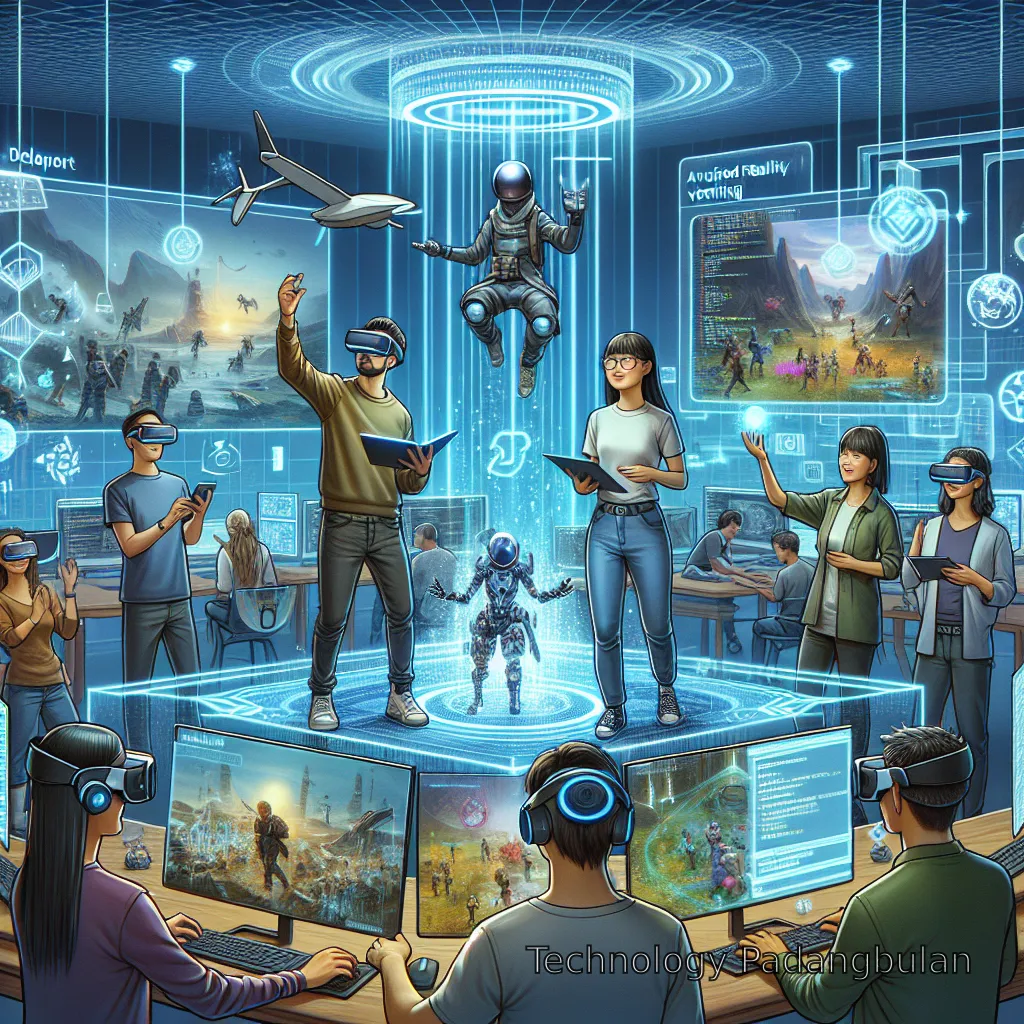
Once your SDK is in place, you need a powerful engine to build the game itself. This is where your virtual characters, environments, and game logic reside. Two major contenders dominate the game development landscape, and both offer excellent AR capabilities:
- **Unity:** Often considered the industry standard for AR and mobile game development, Unity is incredibly versatile and user-friendly. It supports both ARKit and ARCore with dedicated plugins, making the integration seamless. Its C# scripting language is widely adopted, and its asset store is a treasure trove of pre-made models, textures, and tools, significantly speeding up development. Many popular AR games, from casual experiences to more complex titles, are built on Unity due to its flexibility and strong community support.
- **Unreal Engine:** Known for its stunning graphical fidelity and powerful rendering capabilities, Unreal Engine is often preferred for more visually demanding AR experiences. While it has a steeper learning curve (using C++ and its visual scripting language, Blueprints), it can deliver breathtaking realistic visuals that truly blur the line between digital and physical. For developers aiming for cinematic quality AR games, Unreal is a formidable choice.
Your choice of engine will heavily influence your workflow, the visual quality of your game, and the development resources you’ll need.
The Art of Spatial Design and Interaction
This is where AR gaming truly differentiates itself. It’s not just about what you put in the virtual world, but how it interacts with the *real* world. Spatial design in AR involves carefully considering the player’s physical environment as part of the game’s canvas.
- **Anchoring Objects:** A crucial aspect is correctly ‘anchoring’ virtual objects to real-world points. Whether it’s a virtual portal appearing on a wall or a character standing firmly on your living room floor, accurate tracking and stable anchoring prevent virtual objects from ‘floating’ or ‘sliding,’ which breaks immersion. This requires robust plane detection and persistent tracking capabilities from your chosen SDK.
- **User Input and Interaction:** How do players interact with your AR game? It’s often a blend of traditional touch screen controls, combined with physical movement. Players might walk around a virtual object to view it from different angles, physically dodge incoming projectiles, or use gestures to cast spells. Designing intuitive controls that feel natural in a mixed-reality environment is key to player engagement and comfort.
- **Persistence:** Imagine leaving a virtual item in your park and finding it there the next day. Persistence allows AR objects to remain in a specific real-world location even after the app is closed, opening up possibilities for ongoing narratives and shared experiences. This technology is still evolving but holds immense promise for creating living, breathing AR worlds.
Key Stages in the AR Game Development Lifecycle
Building an AR game, like any software project, follows a structured lifecycle. However, AR adds a few unique considerations that developers must embrace to succeed.
Concept and Prototyping
Every great game starts with a compelling idea. For AR, this idea must inherently leverage the unique qualities of augmented reality. Instead of just slapping a 3D model into the real world, think about how the real world *enhances* the game. Is it about discovery, exploration, strategic placement, or environmental interaction?
Once the core concept is solid, rapid prototyping is your best friend. This involves quickly building a bare-bones version of your game’s core mechanic to test its feasibility and fun factor. Does placing virtual creatures in a real park feel engaging? Is the interaction intuitive? Prototyping allows you to fail fast, learn, and iterate without investing too much time and resources into a flawed concept. It’s about getting the AR experience into players’ hands as early as possible.
Asset Creation and Integration
This stage is all about bringing your game world to life visually and audibly. For AR games, asset creation has some specific nuances:
- **3D Models & Animations:** These need to be optimized for performance on mobile devices. Detailed models and complex animations can quickly drain battery and reduce frame rates. It’s a delicate balance between visual fidelity and performance.
- **Audio:** Sound design is crucial for immersion. Positional audio, where sounds originate from virtual objects in your real space, can dramatically enhance the feeling of presence and believability. Imagine hearing a virtual monster rustling in the bushes behind you!
- **Integration:** Once created, these assets are imported into your game engine and configured to interact with the AR SDK. This involves setting up materials, textures, physics properties, and animations, ensuring they look and behave as intended within the augmented environment. A well-integrated asset feels like it truly belongs in the real world.
Testing and Iteration
Testing is paramount in AR development, perhaps even more so than traditional games. Why? Because the ‘environment’ is constantly changing. Your game needs to perform reliably in diverse lighting conditions, on different surfaces (wood, carpet, grass), and in varying real-world clutter.
- **Environmental Variations:** Test your game indoors and outdoors, in bright light and dim light, on textured and plain surfaces. Does plane detection work consistently? Do virtual objects maintain their position? Does occlusion (objects appearing behind real-world items) function correctly?
- **User Experience (UX) Testing:** Observe how players interact with your game. Are the controls intuitive? Is there any motion sickness (a common AR/VR concern)? Is the game too demanding on their device or battery? Feedback from real players in varied environments is invaluable for refining the experience. This iterative process of testing, identifying issues, and refining is what separates good AR games from great ones. It ensures that the magic of AR isn’t broken by technical glitches.
Crafting Immersive Experiences: Design Principles for AR Games
The ‘magic’ of AR isn’t just about technology; it’s about thoughtful design. To truly captivate players, AR games need to be more than just digital stickers on a camera feed. They need to create a convincing illusion that the digital elements are genuinely part of the physical world. This requires a strong adherence to specific design principles that prioritize immersion, intuition, and performance.
Blending Real and Virtual Seamlessly
This is the holy grail of AR design: making the digital indistinguishable from the real. When a player genuinely believes a virtual object is *there*, that’s when the magic happens.
- **Realistic Rendering and Lighting:** Virtual objects should ideally match the lighting and shadows of the real environment. Advanced AR SDKs offer light estimation, allowing developers to dynamically adjust the digital lighting to mimic the ambient light detected by the camera. This creates a more cohesive visual blend.
- **Occlusion and Physics:** For true realism, virtual objects must interact with the real world. If a digital character walks behind a real chair, it should be occluded (hidden) by the chair. Similarly, if a virtual ball hits a real wall, it should bounce off realistically. Implementing proper occlusion and physics engines ensures that the virtual world respects the rules of the physical one, preventing jarring visual inconsistencies that break the spell. This meticulous attention to detail is what elevates a simple AR experience into a truly immersive gaming technology. When the digital blends so well with the physical, the sense of presence becomes incredibly strong, drawing players deeper into the augmented reality.
Intuitive Interaction and User Comfort
An amazing AR experience can quickly turn frustrating if interactions are clunky or if the player feels unwell. Designing for comfort and intuition is paramount.
- **Clear UI/UX:** User interfaces should be clear, concise, and ideally, integrated naturally into the 3D space rather than floating awkwardly. Buttons and information should be easily accessible without obscuring the augmented view.
- **Avoiding Motion Sickness:** While less prevalent than in VR, AR can still induce motion sickness if virtual objects move erratically or if the tracking is unstable. Maintaining stable tracking, providing clear visual cues, and ensuring smooth transitions are vital. Designers should also consider how much physical movement is required and offer comfortable alternatives where appropriate. Thinking about how the player feels, sees, and interacts with the game directly impacts the overall sensory gaming experiences, ensuring they are delightful rather than disorienting. Balancing these elements ensures that the player’s primary focus remains on the game, not on battling discomfort.
Performance and Device Optimization
AR games are often resource-intensive. They utilize cameras, motion sensors, powerful processors, and rendering engines simultaneously. Therefore, optimization is not an afterthought; it’s a core design principle.
- **Battery Life:** AR apps can be notorious battery drainers. Developers must optimize 3D models, textures, animations, and code to be as efficient as possible. Smart resource management, such as only rendering what’s visible, is crucial.
- **Frame Rate:** A consistent and high frame rate (aiming for 30-60 frames per second) is essential for a smooth, comfortable AR experience. Low frame rates lead to choppiness, lag, and can contribute to motion sickness.
- **Compatibility:** While ARCore and ARKit support a wide range of devices, older or less powerful phones might struggle. Developers often need to implement various graphical settings or asset quality levels to ensure their game is playable and enjoyable across a broader spectrum of compatible devices. Balancing ambition with practical device limitations is a continuous challenge in AR gaming development.
Challenges and Future Trends in AR Gaming Development
Like any cutting-edge technology, AR gaming isn’t without its hurdles. However, overcoming these challenges paves the way for a future brimming with incredible possibilities. The journey of **AR gaming development** is far from over; it’s just getting started.
Current Hurdles
Despite rapid advancements, AR gaming still faces several significant challenges:
- **Hardware Limitations:** While smartphones are ubiquitous, they aren’t ideal AR devices. The ‘magic window’ effect of looking through a phone screen can feel limiting. Dedicated AR glasses with wider fields of view, better battery life, and more comfortable form factors are still evolving. Until truly consumer-friendly AR glasses become mainstream, mobile AR will continue to face adoption friction.
- **User Adoption and Engagement:** Beyond initial novelty, retaining users in AR games requires compelling, long-term experiences. The ‘wow’ factor wears off, and games need deep mechanics, social features, and persistent worlds to keep players coming back. Many early AR titles struggled with this once the initial hype subsided.
- **Monetization Models:** Finding sustainable and ethical ways to monetize AR games is another puzzle. Traditional free-to-play models with in-app purchases work, but AR opens doors to unique opportunities like location-based premium content or real-world sponsored activations, which are still being explored and refined. Balancing innovative monetization with player experience is key. While the AR market is growing significantly, as noted by Statista’s reports on Augmented Reality, consistent revenue streams for developers remain a focus.
The Road Ahead: What’s Next for AR Games?
The future of AR gaming is incredibly bright, fueled by ongoing innovation and research. Here’s a glimpse of what’s on the horizon:
- **Advanced Spatial Computing:** Imagine AR systems that map entire cities in 3D, allowing for persistent, shared digital overlays visible to everyone with an AR device. This could lead to massive multiplayer AR games where digital elements truly feel part of the urban fabric. Shared AR experiences, where multiple players interact with the same virtual objects in the same physical space, are becoming more robust.
- **Evolution of AR Glasses and Headsets:** Major tech companies are heavily investing in consumer-grade AR glasses. When these devices become lightweight, stylish, affordable, and offer a wide field of view, they will unlock an entirely new paradigm for AR gaming – true hands-free, always-on augmented worlds. This will shift gameplay from looking through a phone to directly experiencing digital content overlaid onto your natural vision.
- **AI Integration:** Artificial intelligence will play a critical role, from creating more intelligent and adaptive virtual characters to dynamic content generation based on a player’s real-world context or preferences. Imagine an AR game that adapts its challenges based on the weather outside or the objects it identifies in your room.
- **Haptic Feedback and Multi-Sensory Experiences:** As AR hardware evolves, expect more advanced haptic feedback (tactile sensations) to make digital interactions feel more real. Imagine feeling the vibration of a virtual creature walking past you or the impact of a digital bullet. This will deepen the overall sensory immersion in augmented reality, as discussed by publications like Wired, creating experiences that engage more than just sight and sound.
The world is your new game board, and developers are constantly adding new pieces to it. The blend of physical and digital will only become more seamless, more intelligent, and more captivating.
Conclusion
The realm of **AR gaming development** is a vibrant, ever-evolving frontier where imagination truly meets reality. From the foundational SDKs that allow our devices to understand the world to the intricate design principles that craft compelling illusions, every step in the development process is about pushing the boundaries of interactive entertainment. It’s a field that demands technical prowess, creative vision, and a keen understanding of human interaction with both the digital and physical.
We’ve journeyed through the core components, peeked behind the curtain at the development lifecycle, and explored the essential design philosophies that make AR games truly shine. We’ve also acknowledged the challenges that lie ahead – from hardware limitations to user adoption – and cast our gaze towards a future brimming with advanced spatial computing, sophisticated AR wearables, and intelligent game worlds.
AR gaming isn’t just a niche; it’s a fundamental shift in how we engage with technology and our environment. It invites us to look up from our screens and rediscover the world around us, now infused with endless digital possibilities. For developers, it’s an exciting call to arms, an invitation to invent the next big thing, to craft experiences that make players gasp with wonder, and to build the realities of tomorrow, today. The world is your canvas; what will you augment?
Conclusion
The realm of **AR gaming development** is a vibrant, ever-evolving frontier where imagination truly meets reality. From the foundational SDKs that allow our devices to understand the world to the intricate design principles that craft compelling illusions, every step in the development process is about pushing the boundaries of interactive entertainment. It’s a field that demands technical prowess, creative vision, and a keen understanding of human interaction with both the digital and physical.
We’ve journeyed through the core components, peeked behind the curtain at the development lifecycle, and explored the essential design philosophies that make AR games truly shine. We’ve also acknowledged the challenges that lie ahead – from hardware limitations to user adoption – and cast our gaze towards a future brimming with advanced spatial computing, sophisticated AR wearables, and intelligent game worlds.
AR gaming isn’t just a niche; it’s a fundamental shift in how we engage with technology and our environment. It invites us to look up from our screens and rediscover the world around us, now infused with endless digital possibilities. For developers, it’s an exciting call to arms, an invitation to invent the next big thing, to craft experiences that make players gasp with wonder, and to build the realities of tomorrow, today. The world is your canvas; what will you augment?
References
FAQ
What is AR gaming?
AR gaming, or Augmented Reality gaming, overlays digital content and characters onto the real world, viewed typically through a smartphone camera or AR glasses. It blends the virtual with your physical environment, allowing you to interact with digital elements as if they were present in your surroundings.
What’s the main difference between AR and VR gaming?
The key difference is immersion level. VR (Virtual Reality) completely replaces your real-world view with a simulated digital environment, requiring a headset. AR (Augmented Reality) enhances your real-world view by adding digital elements to it, keeping you connected to your physical surroundings.
What are the essential tools for AR game development?
Essential tools include an AR SDK (like Apple’s ARKit for iOS or Google’s ARCore for Android) to help your app understand the real world, and a game engine (such as Unity or Unreal Engine) to build and render the game’s digital content. 3D modeling software and audio editing tools are also crucial for asset creation.
Is AR gaming profitable for developers?
Yes, AR gaming can be profitable, but like any game development, success varies. Popular AR games like Pokémon GO have generated billions. Monetization typically involves in-app purchases, advertisements, or premium features. As the AR market grows and hardware improves, new opportunities for profitability are emerging.
What are the biggest challenges in AR game development?
Current challenges include hardware limitations (battery drain, field of view on phones, lack of mainstream AR glasses), achieving seamless blending between virtual and real worlds, ensuring stable tracking across diverse environments, and maintaining long-term player engagement beyond initial novelty.
How long does it typically take to develop an AR game?
The development time for an AR game varies widely based on complexity. A simple proof-of-concept might take weeks, while a full-featured, polished AR game with extensive content, sophisticated mechanics, and multiplayer capabilities could take several months to over a year with a dedicated team.
What does the future hold for AR gaming?
The future of AR gaming is exciting! It includes the widespread adoption of advanced AR glasses for hands-free experiences, highly sophisticated spatial computing for persistent and shared augmented worlds, enhanced AI integration for dynamic gameplay, and richer multi-sensory feedback to create incredibly immersive and believable digital-physical interactions.
