Remember the thrill of hunting Pokémon in your local park, eyes glued to your phone, suddenly seeing a digital creature perched on a real-world fountain? That wasn’t just a game; it was a glimpse into the incredible world of Augmented Reality (AR) gaming. Unlike its cousin Virtual Reality (VR), which whisks you away to entirely new digital realms, AR seamlessly blends digital elements with our physical surroundings, creating a captivating overlay of interactive experiences. It’s like having a magical lens that reveals a hidden layer to reality.
But how do these mind-bending experiences come to life? What goes into creating a game that knows your coffee table isn’t just a surface, but a battlefield for tiny digital warriors? In this deep dive, we’ll pull back the curtain on **AR gaming development**, exploring the tools, techniques, and sheer creativity involved in building these cutting-edge games. Whether you’re a budding developer, a curious gamer, or just someone fascinated by the future of technology, buckle up – we’re about to embark on an exciting journey into the heart of augmented reality.
What Exactly is AR Gaming? (And Why Should You Care?)
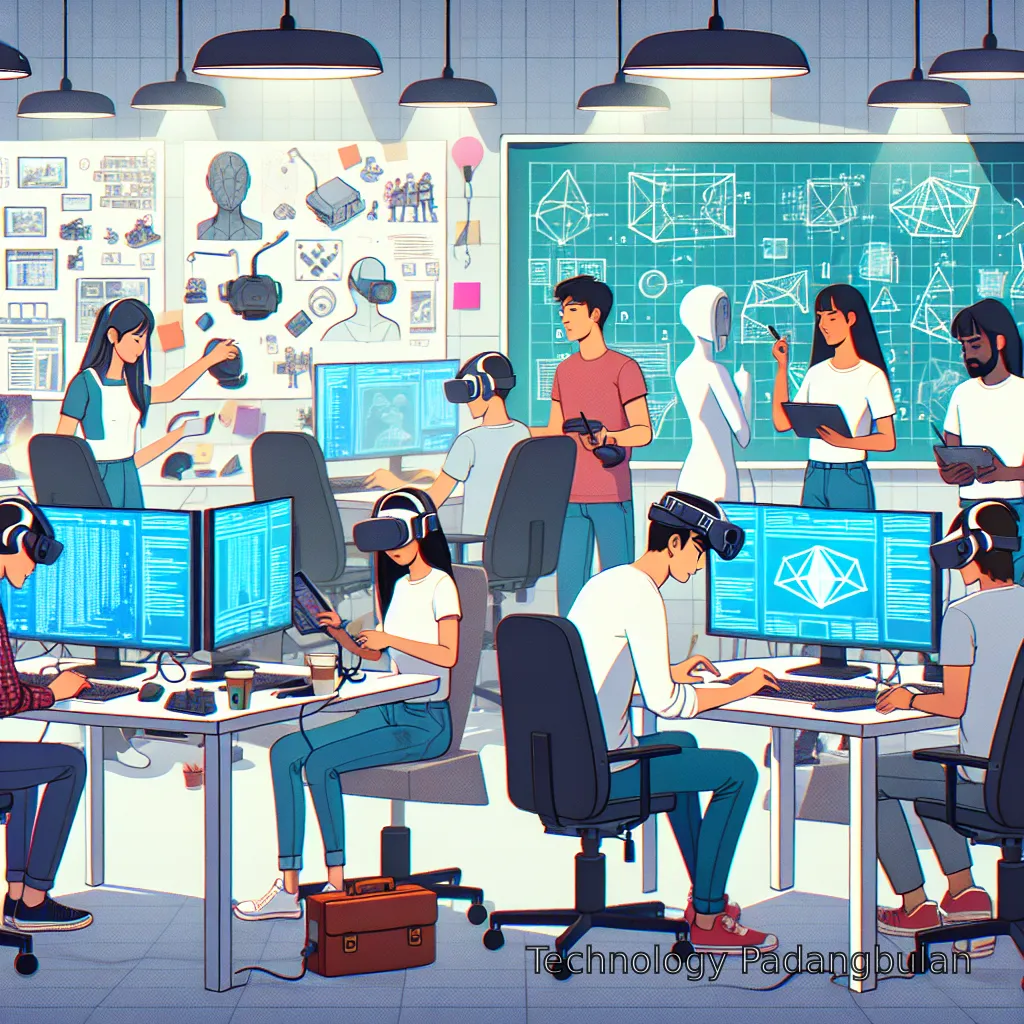
Before we dive into the ‘how,’ let’s solidify the ‘what.’ At its core, Augmented Reality gaming takes your real-world environment and enhances it with digital information. Think of it as a digital filter over reality, where the game isn’t confined to your screen but spills out into your living room, your backyard, or even the bustling city streets. You’re still grounded in your physical space, but now there are virtual objects, characters, and challenges interacting with it.
Read also : Immersive Gaming Technology
Why does this matter? Because it opens up a whole new dimension of play! Traditional games require you to sit in front of a screen, pulling you away from your immediate surroundings. AR games, however, bring the game to *you*, into your environment. This creates a deeply personal and often surprisingly social experience. Imagine collaborating with friends to solve a puzzle that’s projected onto your kitchen table, or defending your ‘fort’ (aka, your couch) from digital invaders. It transforms the mundane into the magical, turning everyday locations into playgrounds for extraordinary adventures. It’s a fundamental shift in how we interact with digital entertainment, bridging the gap between the virtual and the actual in a way that feels both futuristic and incredibly natural. This unique blend of digital content within the real world is what makes augmented reality games so compelling and why the field of AR gaming development is buzzing with innovation.
The Core Ingredients of AR Gaming Development
Bringing an AR game to life is a complex symphony of technology and creativity. It’s not just about drawing cool characters; it’s about making those characters understand and interact realistically with the world around you. Let’s break down the key ingredients developers stir into this digital potion.
Read also : Sensory gaming experiences
Understanding the Tech Stack: The Engine Room
At the heart of any AR game lies a robust tech stack. This is the collection of software and tools that allows the magic to happen:
- **AR SDKs (Software Development Kits):** These are the foundational tools that enable your device (usually a smartphone or tablet) to ‘see’ and ‘understand’ the real world. The big players here are Apple’s ARKit and Google’s ARCore. They handle complex tasks like ‘surface detection’ (identifying floors, tables, walls), ‘motion tracking’ (knowing where your device is moving), and ‘light estimation’ (understanding the lighting conditions of your environment). Without these, your digital character wouldn’t know if it’s walking on a rug or floating in mid-air.
- **Game Engines:** Once your device understands the world, you need a powerful engine to render the game content. Unity and Unreal Engine are the undisputed champions here. They provide frameworks for creating 3D graphics, handling animations, physics, and user input. Many AR development tools integrate seamlessly with these engines, allowing developers to build rich, interactive augmented reality games. Imagine Unity as the vast workshop where all the digital assets are assembled and brought to life.
- **Programming Languages:** C# (for Unity) and C++ (for Unreal Engine) are the primary languages used to script the game’s logic, interactions, and behaviors. These languages are the invisible threads that tie everything together, telling your digital dragon how to breathe fire and where to land.
- **3D Modeling & Animation Software:** Tools like Blender, Maya, or ZBrush are used by artists to create the virtual characters, objects, and environments that populate your AR world. These assets need to be optimized for AR to ensure smooth performance on mobile devices.
Mastering these tools is paramount for successful AR game design, ensuring that the virtual elements feel truly part of your physical space.
Crafting Immersive Experiences: More Than Just Graphics
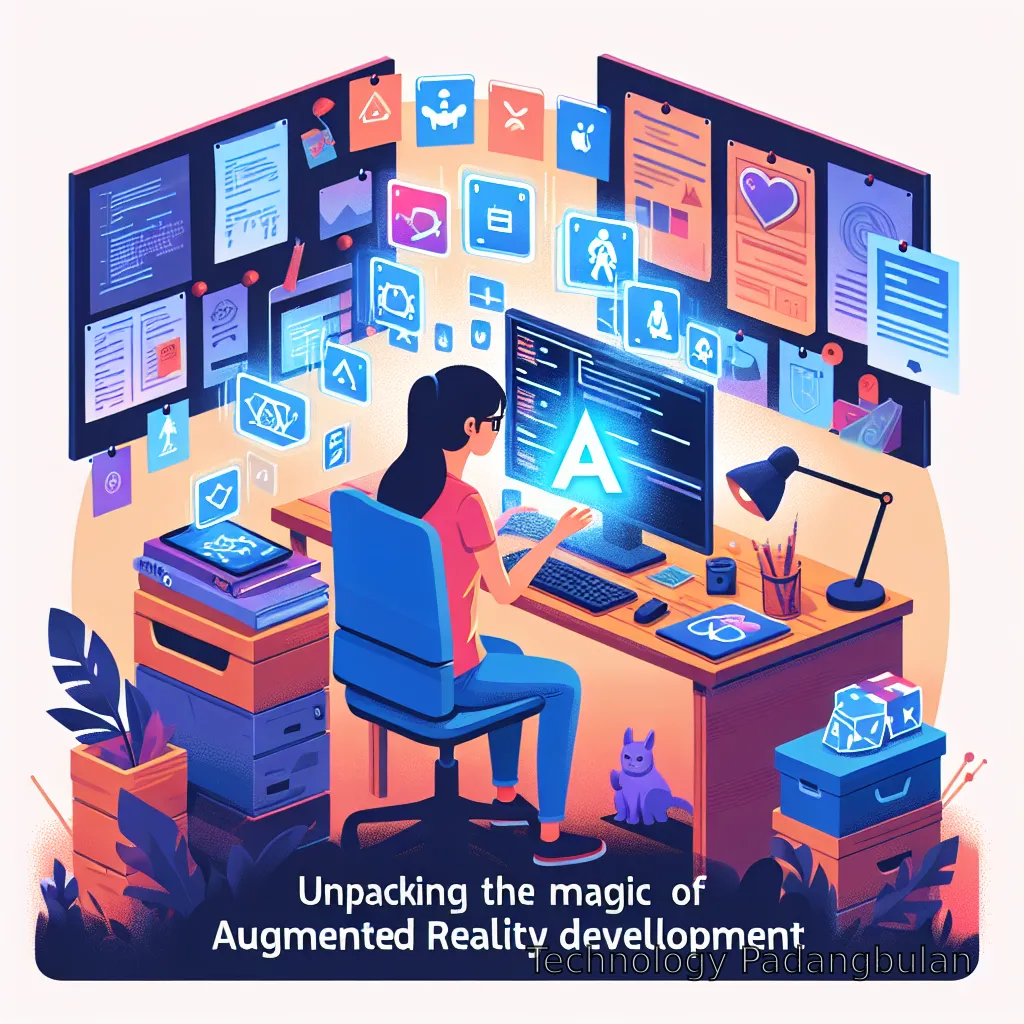
Great AR gaming development goes beyond just putting 3D models into the real world. It’s about crafting experiences that feel genuinely integrated and engaging. This is where the artistry of game design truly shines:
- **Spatial Awareness and Persistence:** A crucial aspect is making digital objects *feel* like they belong. This means understanding depth, occlusion (when a real-world object blocks a virtual one), and even ‘persistence’ – remembering where a virtual object was placed even after you’ve closed the app. Imagine leaving a digital message on your friend’s desk that they can find later with their own phone. This sophisticated understanding of the physical environment leads to truly immersive gaming technology.
- **Intuitive UI/UX Design:** How do players interact with the game? Since AR games often use the camera as their window, traditional UI elements might get in the way. Designing user interfaces that are minimalist, context-aware, and don’t obscure the real world is key. Natural gestures, voice commands, and spatial interactions become much more important.
- **Real-World Interaction:** The magic happens when virtual objects respond to your physical environment. Tapping on a real-world surface to spawn a character, or having a digital creature react to your movement – these interactions blur the lines between reality and game, driving player engagement. It’s about designing mechanics that leverage the unique capabilities of AR, rather than just porting traditional game ideas into a new medium.
From Concept to Code: The AR Game Development Process
So, you’ve got a brilliant idea for an AR game. What’s next? The journey from a spark of imagination to a playable experience involves several distinct phases.
Ideation & Prototyping: Sketching the Future
Every great game starts with a compelling concept. For AR games, this means thinking about how the physical world will enhance or define the gameplay. Will it be a treasure hunt in your neighborhood? A strategic battle on your coffee table? A virtual pet that lives in your room? Once the core idea is solid, developers move to prototyping. This often involves creating simple mock-ups or ‘grey box’ versions of the game to test the core mechanics and AR interactions quickly. It’s about failing fast and learning quicker, ensuring the foundational gameplay feels fun and intuitive in an AR context.
Asset Creation: Building the Virtual World
This is where the artists step in. 3D models for characters, environments, props, and animations are meticulously crafted. For AR, optimizing these assets for performance on mobile devices is crucial. Textures, polygon counts, and animation complexity all need to be carefully managed to ensure the game runs smoothly without draining the battery or causing lag. Sound design also plays a vital role, anchoring virtual events to your real-world perception.
Development & Integration: Where Code Meets Reality
With assets ready and a prototype validated, developers dive into coding. This involves writing the game’s logic, integrating the AR SDKs to enable world tracking and surface detection, and bringing all the assets into the game engine. Collision detection, physics simulations, AI for non-player characters, and user interface elements are all coded and brought to life. It’s the most technical phase, where everything comes together to create a cohesive interactive experience.
Testing & Iteration: Polishing the Portal
Testing an AR game is a beast of its own. Unlike traditional games, you can’t just test it on a single device in a controlled environment. AR games need to be tested across various devices, in different lighting conditions, on diverse surfaces, and in a multitude of real-world scenarios. Does the game perform well indoors and outdoors? Does it handle low light? What if the player moves quickly? Iteration based on this feedback is constant, fine-tuning the AR experience to be as robust and magical as possible. This rigorous testing helps overcome many of the challenges in AR gaming development.
Navigating the Challenges in AR Gaming Development
While the promise of AR gaming is immense, the road to seamless experiences isn’t without its bumps. Developers face unique hurdles:
- **Technical Limitations:** Mobile hardware, while powerful, still has its limits. Battery drain, processing power for complex AR scenes, and the accuracy of world tracking can all impact the user experience. Making a game that looks great and runs smoothly across a wide range of devices is a constant balancing act.
- **Environmental Variability:** The real world is messy and unpredictable. Lighting changes, textured surfaces, reflective materials, and even moving objects can confuse AR tracking systems. Designing games that can gracefully handle this variability without breaking the illusion is a significant challenge.
- **User Comfort and Safety:** Unlike VR, where you’re immersed in a digital world, AR keeps you aware of your surroundings. However, it’s still easy to become engrossed in a game and lose situational awareness. Developers must consider player safety, encouraging awareness of the physical environment, and designing experiences that don’t lead to potential hazards.
- **Monetization Strategies:** Finding sustainable business models beyond initial purchases or ads can be tricky. Integrating virtual goods that enhance the real-world experience, or subscription models for persistent AR worlds, are areas of ongoing exploration.
The Future is Now (and Beyond) for AR Gaming
The current landscape of **AR gaming development** is exciting, but it’s just the tip of the iceberg. The future promises even more breathtaking possibilities:
- **Advanced Hardware:** The advent of dedicated AR glasses and headsets, like Apple Vision Pro, Meta Quest 3, and others, will unlock new levels of immersion and interaction. These devices will offer wider fields of view, more precise tracking, and hands-free interaction, making the digital overlay feel even more natural and persistent. Imagine a world where your favorite game elements are always subtly present, just a glance away.
- **Spatial Computing & Persistent Worlds:** As AR technology matures, we’ll see the rise of ‘spatial computing,’ where digital content is anchored to specific real-world locations and persists over time. Think of shared AR experiences that evolve whether you’re playing or not, creating persistent digital layers over our cities and homes. This could lead to genuinely collaborative augmented reality games that are as dynamic as the real world itself.
- **AI Integration:** Artificial intelligence will make AR characters and environments more responsive and intelligent, blurring the lines further between real and virtual. Imagine NPCs that learn from your interactions and adapt to your physical space in uncanny ways.
- **More Sophisticated Sensory Gaming Experiences:** Beyond visual and auditory, future AR games might incorporate haptic feedback, environmental sensors (temperature, wind), and even scent to create truly multi-sensory experiences. The goal is to make the digital elements feel as tangible as possible.
Conclusion
From the early days of simple overlays to today’s complex interactive worlds, AR gaming development has come a long way, and its journey is far from over. It’s a field where technology, creativity, and human imagination constantly collide, pushing the boundaries of what’s possible in entertainment. The magic lies in its ability to take our familiar world and infuse it with digital wonder, turning everyday spaces into canvases for extraordinary adventures. As developers continue to innovate, overcome challenges, and embrace new hardware, we can expect AR games to become an even more integral and thrilling part of our lives, transforming how we play, interact, and perceive reality itself. So, keep an eye out; your next great adventure might just be waiting around the corner, hidden in plain sight, powered by the incredible world of augmented reality.
References
FAQ
What is the difference between AR and VR gaming?
AR (Augmented Reality) gaming overlays digital content onto your real-world environment, allowing you to interact with virtual elements within your physical space. VR (Virtual Reality) gaming, on the other hand, fully immerses you in a completely simulated digital environment, shutting out the real world.
What are the essential tools for AR gaming development?
Key tools include AR SDKs like Apple’s ARKit and Google’s ARCore for world understanding, game engines like Unity or Unreal Engine for rendering and logic, and 3D modeling software like Blender or Maya for creating game assets. Programming languages like C# (Unity) and C++ (Unreal) are also crucial.
What are some popular examples of AR games?
The most widely recognized example is Pokémon GO, which popularized AR gaming globally. Other notable titles include Ingress, Minecraft Earth, Harry Potter: Wizards Unite, and various Snapchat and Instagram filters that use AR for interactive experiences.
What are the biggest challenges in AR game development?
Major challenges include overcoming hardware limitations (battery drain, processing power), handling environmental variability (lighting, different surfaces), ensuring user comfort and safety, and developing effective monetization strategies for a new gaming paradigm.
How do AR games ‘see’ the real world?
AR games use your device’s camera and sensors (accelerometer, gyroscope) along with sophisticated algorithms (provided by AR SDKs like ARKit/ARCore) to perform ‘simultaneous localization and mapping’ (SLAM). This allows the device to track its own position and orientation in space, detect flat surfaces, estimate lighting, and understand the geometry of its surroundings.
What does the future hold for AR gaming?
The future of AR gaming is expected to include more advanced dedicated AR glasses, the rise of ‘spatial computing’ with persistent shared digital worlds, deeper integration with AI for more intelligent interactions, and sophisticated multi-sensory experiences beyond just visuals and sound. It promises even greater immersion and seamless blending of digital and physical realities.
