Remember those sci-fi movies where robots lived among us, and AI was more than just a smart assistant? Well, buckle up, because that future is rapidly becoming our present! Artificial Intelligence (AI) and Robotics are no longer just buzzwords confined to academic labs or industrial factories. They’re weaving their way into every fabric of our lives, transforming everything from healthcare and manufacturing to how we communicate and even create art. It’s a dizzying, thrilling, and sometimes a little bit daunting journey, isn’t it? From algorithms learning at unprecedented speeds to robots gaining dexterity that rivals human hands, the pace of innovation is nothing short of breathtaking. But what exactly are these innovations, and what do they mean for us? Let’s dive in and explore the latest advancements that are shaping our world, one intelligent machine and ingenious algorithm at a time.
The Dawn of a New Era: Deep Learning Breakthroughs and Generative AI’s Rise
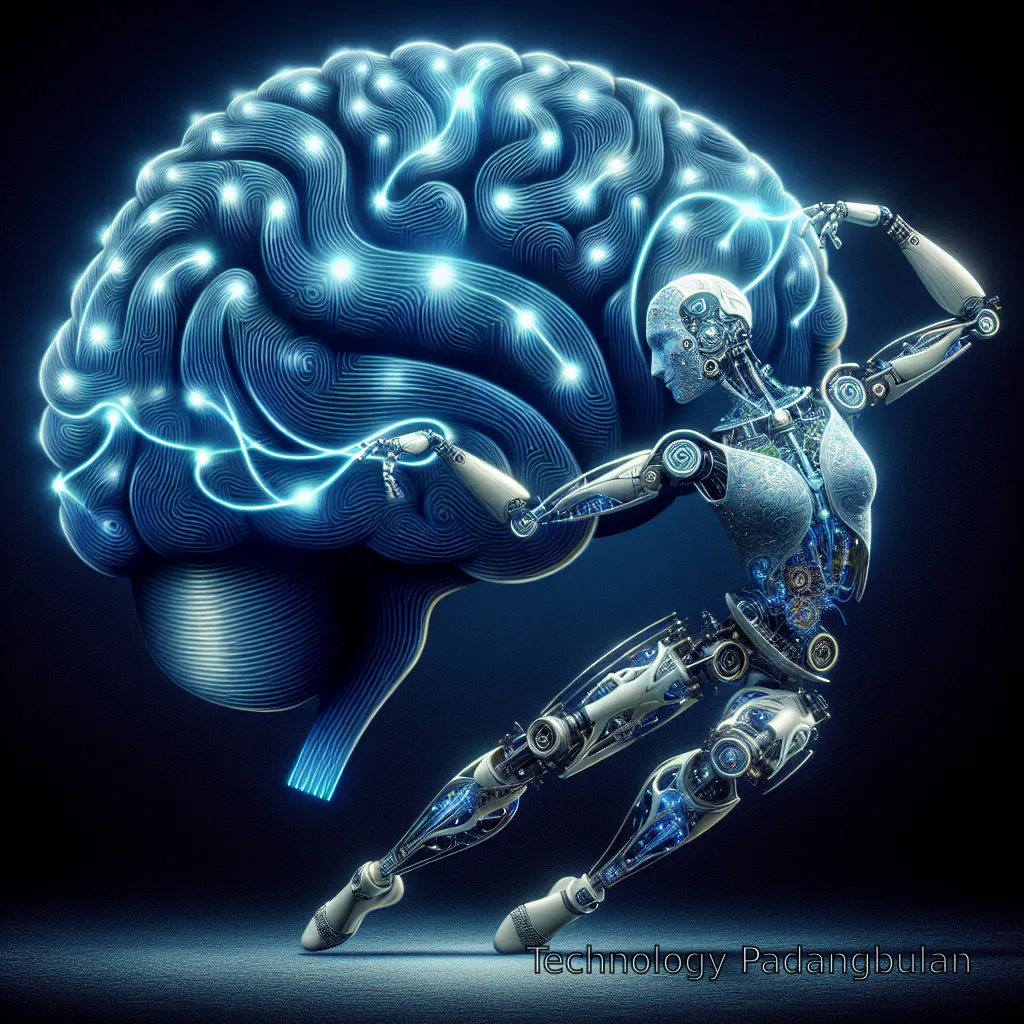
It feels like just yesterday AI was struggling to identify cats in pictures, and now it’s composing symphonies and writing entire novels! The secret sauce behind much of this incredible progress? Deep learning breakthroughs. This subset of machine learning uses neural networks inspired by the human brain, allowing AI systems to learn from vast amounts of data with astonishing accuracy. Think of it like a child learning; the more experiences they have, the better they become at recognizing patterns and making sense of the world. One of the most exciting recent developments stemming from deep learning is the explosion of generative AI tools news. These aren’t just intelligent systems; they’re creative ones! From text-to-image generators that can conjure fantastical landscapes with a simple prompt to AI models that can draft compelling articles or even complex code, generative AI is redefining creativity. Suddenly, you don’t need years of art training to visualize an idea, or hours of writing experience to get a first draft going. While they are powerful tools, they also raise fascinating questions about originality, authorship, and the very nature of human creativity itself. It’s a bit like having a magical pen that can draw anything you imagine, but you still need to be the one to imagine it!
Robotics Steps Out of the Factory: Innovation in Action
For decades, robots were synonymous with massive, clunky arms welding cars on assembly lines. And while industrial robots are still innovating – becoming more precise, agile, and energy-efficient – the true excitement now lies in how robotics is expanding its horizons far beyond the factory floor. We’re seeing Boston Dynamics’ humanoid robots performing parkour, surgical robots assisting doctors with incredible precision, and even delivery robots navigating city sidewalks. But it’s not just about flashy displays of agility. Robotics innovations are quietly revolutionizing logistics, making warehouses smarter and more efficient. In healthcare, robotic companions are assisting the elderly, offering both practical help and much-needed companionship. Farmers are employing autonomous robots for tasks like precision planting and harvesting, reducing labor costs and environmental impact. The key here is not just building better mechanical bodies, but seamlessly integrating them with advanced AI – giving them ‘brains’ to perceive, decide, and interact more naturally with complex environments. Imagine a future where robots aren’t just tools, but collaborative partners in our daily lives.
Read also : Computer vision trends
Beyond Human Eyes: The Power of Computer Vision Trends
How do robots know where they’re going? How do self-driving cars ‘see’ the road? The answer lies in the incredible advancements in computer vision trends. This field of AI is all about enabling machines to interpret and understand the visual world, much like humans do. From object recognition and facial detection to understanding complex scenes and predicting actions, computer vision is the ‘eyes’ of the AI and robotic world. Recent breakthroughs have made these systems incredibly accurate and robust. Think of how quickly and accurately your smartphone can now identify faces in your photos, or how advanced surveillance systems can track specific items in a crowd. This technology is critical for everything from quality control in manufacturing, where tiny defects can be spotted instantly, to augmented reality applications that overlay digital information onto our real-world view. The future holds even more sophisticated applications, potentially transforming everything from personalized shopping experiences to groundbreaking medical diagnostics. To dive deeper into how machines are learning to see, you might find more fascinating insights into the specific advancements and challenges in computer vision trends.
Navigating the Future: Critical AI Ethics Discussions
As AI and robotics become more powerful and pervasive, so too do the questions surrounding their ethical implications. It’s not all ‘Terminator’ scenarios, but rather nuanced dilemmas that require careful thought and proactive solutions. Critical AI ethics discussions are now at the forefront of development, addressing concerns such as bias in algorithms, data privacy, accountability for AI decisions, and the potential impact on employment. Consider facial recognition technology: incredibly powerful for security, but also a potential tool for mass surveillance. Or imagine an AI system making life-or-death decisions in a medical setting – who is responsible if something goes wrong? These are not easy questions, and there are no simple answers. Governments, academics, and tech companies are grappling with how to ensure AI is developed and deployed responsibly, upholding human values and societal well-being. It’s a constant balancing act between innovation and responsibility, ensuring that our technological progress serves humanity rather than creating new problems. For a deeper dive into these complex issues, exploring ongoing AI ethics discussions is crucial.
Read also : AI ethics discussions
The Quest for True Intelligence: Unpacking Artificial General Intelligence (AGI)
While current AI excels at specific tasks – playing chess, recognizing faces, generating text – it often struggles outside its narrow domain. This brings us to the holy grail of AI research: Artificial General Intelligence (AGI). Unlike the ‘narrow AI’ we have today, AGI would possess the ability to understand, learn, and apply intelligence across a wide range of tasks, much like a human being. Imagine an AI that can not only write code but also paint a masterpiece, philosophize, and learn entirely new skills on its own – all without specific pre-programming. Developing AGI is an incredibly complex undertaking, often referred to as ‘the hard problem.’ Researchers are exploring various pathways, from large language models pushing the boundaries of what’s possible to more biologically inspired neural architectures. While some optimistically predict AGI within decades, others remain cautious, highlighting the immense conceptual and technical hurdles. The potential benefits are staggering – solving humanity’s grand challenges, accelerating scientific discovery, and transforming our understanding of intelligence itself. However, the potential risks are equally profound, making the ethical considerations around AGI even more critical. It’s a vision that inspires awe and caution in equal measure.
The Road Ahead: Synergies and Societal Impact
The future of AI and robotics isn’t about these fields operating in isolation; it’s about their increasingly powerful synergy. Picture AI-powered robots that can not only perform complex tasks but also adapt, learn from their mistakes, and even anticipate human needs. This convergence promises to create solutions we can barely imagine today. Consider personalized medicine, where AI analyzes vast datasets to create bespoke treatment plans, and robotics delivers those treatments with unprecedented precision. Or imagine smart cities where autonomous vehicles communicate with intelligent infrastructure to optimize traffic flow and reduce pollution. The societal impact will be immense, ranging from new industries and job roles to fundamental shifts in education and daily life. While exciting, this also means we must proactively address challenges like job displacement through reskilling initiatives, ensure equitable access to these technologies, and foster public understanding and trust. The journey ahead is a collaborative one, where human ingenuity and machine intelligence work hand-in-hand to build a more efficient, productive, and hopefully, a better world.
Conclusion
The world of AI & Robotics Innovations is a constantly evolving landscape, brimming with both astonishing potential and complex challenges. From the creative leaps of generative AI and the expanding reach of robotics beyond traditional factories, to the sophisticated ‘eyes’ of computer vision and the profound ethical questions we must confront, these technologies are fundamentally reshaping our present and dictating our future. We’re not just spectators in this revolution; we’re participants, and understanding these advancements is key to navigating the exciting, unpredictable path ahead. As we continue to push the boundaries of what machines can do, it’s crucial to remember that the ultimate goal is to augment human capabilities and improve quality of life for everyone, fostering a future where intelligence, whether artificial or natural, serves the greater good.
References
FAQ
What is the biggest difference between current AI and Artificial General Intelligence (AGI)?
Current AI, often called ‘narrow AI,’ is designed to perform specific tasks, like playing chess or recognizing faces. AGI, on the other hand, would possess human-like cognitive abilities, capable of understanding, learning, and applying intelligence across a vast range of tasks and domains, essentially thinking like a human.
How are AI and robotics currently impacting daily life?
AI and robotics are impacting daily life in numerous ways, from powering your smartphone’s virtual assistant and optimizing your navigation apps, to improving medical diagnoses, automating tasks in logistics, and enhancing manufacturing processes. They’re becoming increasingly integrated into our homes and workplaces.
What are the main ethical concerns surrounding AI development?
Key ethical concerns include algorithmic bias (AI making unfair decisions based on biased training data), data privacy, accountability for AI’s actions, job displacement due to automation, and the potential for misuse of powerful AI technologies.
What is generative AI, and how is it used?
Generative AI refers to AI models capable of creating new and original content, such as text, images, music, or even code. It’s used for artistic creation, content generation, product design, and even scientific research, pushing the boundaries of what machines can ‘create.’
How does computer vision contribute to robotics?
Computer vision is the ‘eyes’ for robots, allowing them to perceive, process, and understand visual information from their environment. This is crucial for navigation, object recognition, manipulation, and interaction, enabling robots to perform complex tasks in dynamic real-world settings.
Will robots take all our jobs?
While AI and robotics will undoubtedly automate many routine or repetitive tasks, leading to job displacement in some sectors, they are also expected to create new jobs and industries. The focus is increasingly on humans working alongside intelligent machines, with humans focusing on creativity, critical thinking, and tasks requiring emotional intelligence.
