Ever wondered what magic happens behind the scenes to bring those sprawling open worlds or intensely detailed characters to life on your screen? It’s not magic, but something equally captivating: Game Development Technology. From the smallest indie projects crafted by a single visionary to the blockbuster titles that dominate the industry, technology is the silent hero, constantly evolving and pushing the boundaries of what’s possible in interactive entertainment. Join us on an exciting journey as we peel back the layers of code, pixels, and innovation that define the cutting edge of game creation, exploring the incredible tools and techniques that shape the games we love.
The Digital Architects: Exploring Game Engines
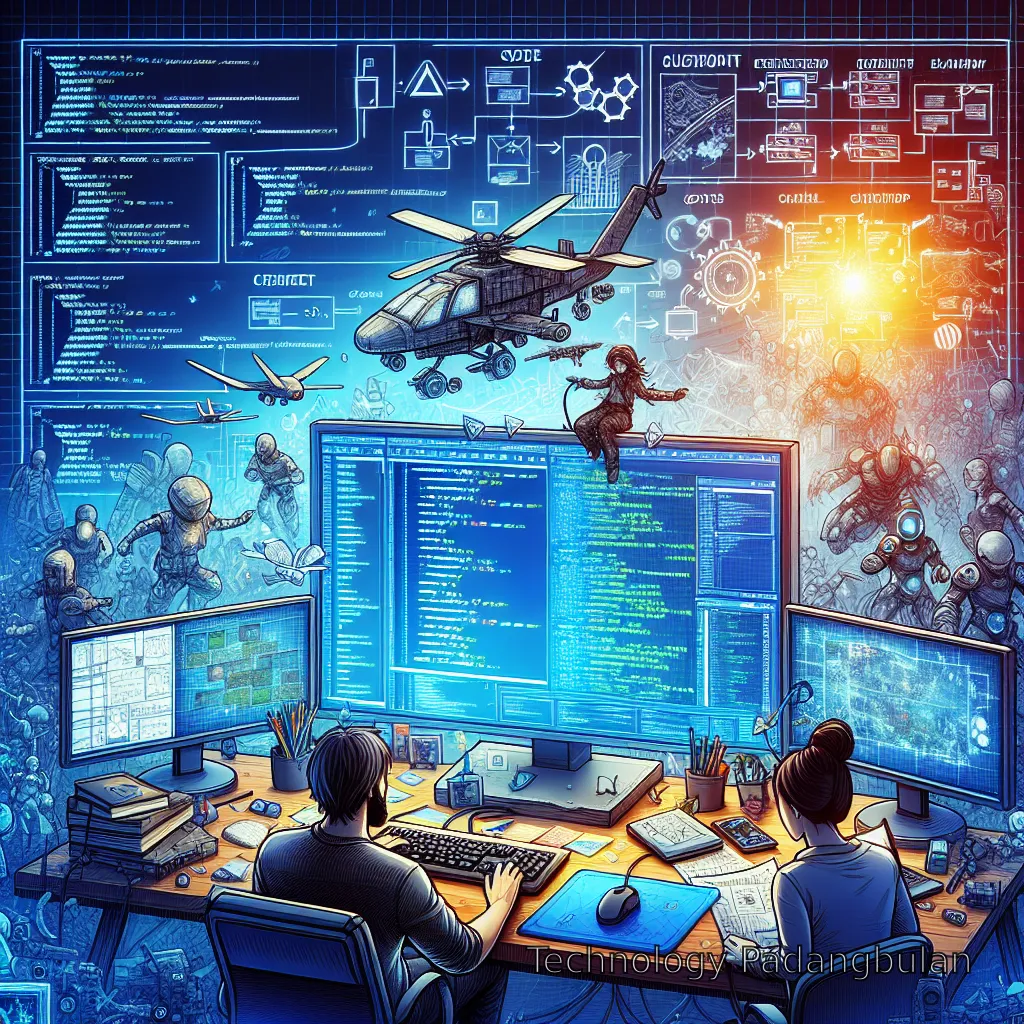
Imagine trying to build a skyscraper without any blueprints, tools, or even a foundation. Sounds impossible, right? That’s essentially what developing a game would be like without a game engine. These powerful software frameworks are the beating heart of game development, providing the essential tools and functionalities needed to create, run, and render games. Think of them as integrated development environments specifically tailored for interactive experiences. They handle everything from graphics rendering and physics simulations to audio processing, animation, networking, and user input. The choice of engine is often one of the first and most critical decisions a development team makes, as it dictates much of their workflow, capabilities, and even the learning curve involved. For instance, giants like Unity and Unreal Engine dominate the professional landscape, offering robust feature sets and extensive communities. Unity is known for its versatility across platforms and ease of use for new developers, while Unreal Engine shines with its photorealistic rendering capabilities and advanced visual scripting with Blueprints. But it’s not just the big players; there are countless other specialized engines, each with its own strengths. Want to dive deeper into how these powerhouses stack up against each other? Check out our detailed game engines comparison to find your perfect match!
Bringing Worlds to Life: Physics and Graphics Engines
Once we have our engine, we need to make our virtual worlds feel real, or at least consistently believable. This is where physics engines and sophisticated graphics rendering come into play. A game physics engine is a specialized component within the larger game engine that simulates real-world physical interactions. Ever seen a car crumple realistically in a crash, or a character’s cape flow dynamically in the wind? That’s the physics engine at work, calculating collisions, gravity, friction, and even soft-body dynamics. Popular examples include Havok, PhysX (NVIDIA), and Box2D (for 2D games), which allow developers to create environments where objects behave predictably and interactively. Without these, every bounce, fall, or explosion would have to be painstakingly animated frame by frame – a monumental and often impossible task. Hand-in-hand with physics is the graphics engine, responsible for the visual spectacle. This is where polygons become models, textures add detail, lighting creates atmosphere, and shaders add that glossy sheen or weathered look. Modern graphics engines leverage advanced techniques like ray tracing, global illumination, and sophisticated particle systems to create breathtakingly realistic or beautifully stylized visuals, blurring the lines between the digital and the real. The sheer computational power required to render these complex scenes in real-time is staggering, a testament to how far Game Development Technology has come.
Read also : Game engines comparison
The Magic of Randomness: Procedural Generation in Games
Ever played a game where you felt like you were exploring a truly unique, uncharted territory every time you started a new session? Chances are, you’ve experienced the wonders of procedural generation. This fascinating technology involves creating game content algorithmically rather than designing it all manually. Think of it as teaching a computer how to ‘imagine’ and build landscapes, levels, quests, or even entire creatures based on a set of rules and parameters. It’s like having an infinite architect at your fingertips! The classic example is Minecraft, where entire worlds are generated block by block, offering endless exploration. But it’s not just about vast, randomly generated maps. Procedural generation can be used for anything from creating unique weapon variations in a looter-shooter to designing dynamic weather patterns, populating cities, or even generating dialogue options. The benefits are enormous: it reduces development time, creates replayability by offering fresh experiences, and allows for much larger, more diverse game worlds than could ever be crafted by hand. However, it’s a delicate balance; too much randomness without careful rule-setting can lead to nonsensical or unplayable content. The art lies in guiding the algorithms to produce surprising yet coherent results. For more on this captivating technique, dive deeper into the world of procedural generation in games.
Sculpting Dreams: 3D Game Development Tools & Asset Creation
While game engines provide the foundation, the actual assets – the characters, environments, props, and sounds – are the soul of the game. This is where specialized 3D game development tools and asset creation software come into play. Artists, animators, and sound designers use a diverse suite of applications to bring the game world to life. For 3D modeling, software like Blender (a free and open-source powerhouse), Autodesk Maya, and 3ds Max are industry standards. These tools allow artists to sculpt, texture, and rig complex 3D models, transforming abstract ideas into tangible game objects. Imagine crafting a majestic dragon, piece by agonizing piece, giving it scales, teeth, and menacing eyes – that’s the domain of 3D modeling. Animation software, often integrated into modeling tools or standalone like Adobe Animate, breathes life into these models, giving characters expressions, movements, and actions. Beyond visuals, audio is crucial for immersion. Digital audio workstations (DAWs) like Ableton Live or FL Studio, alongside sound effect libraries and middleware like FMOD or Wwise, are used to create the soundscapes, music, and Foley effects that complete the player’s experience. Every rustle of leaves, every orchestral swell, every satisfying ‘thwack’ of a sword – it all originates from a dedicated craftsman using powerful audio tools. The synergy between these various tools and the game engine is what ultimately forms a cohesive and believable interactive experience.
Read also : Procedural generation in games
Empowering Visionaries: Indie Game Development Software
Not long ago, creating a video game was largely the domain of large studios with massive budgets and equally massive teams. The barrier to entry was incredibly high. However, thanks to the democratization of Game Development Technology, we’re now in the golden age of indie games. Accessible indie game development software has fundamentally changed the landscape, allowing small teams or even solo developers to craft critically acclaimed and commercially successful titles. Engines like GameMaker Studio 2 and Construct are fantastic for 2D games, offering intuitive drag-and-drop interfaces that minimize the need for extensive coding knowledge. Then there’s Ren’Py, a popular choice for visual novels, making storytelling through interactive fiction incredibly straightforward. Even the big players like Unity and Unreal Engine offer free versions with robust features, enabling aspiring developers to learn and even publish their games without initial financial outlay. This accessibility has fostered an explosion of creativity, leading to unique and experimental games that might never have seen the light of day in a traditional studio environment. Think of games like ‘Stardew Valley,’ created almost entirely by one person, or ‘Undertale,’ which captivated millions with its unique narrative. These successes are a testament to the power of readily available tools putting incredible power directly into the hands of passionate creators, proving that big ideas don’t always need big budgets.
The Horizon: Future Trends in Game Development Technology
The world of game development is a perpetual motion machine, constantly innovating. What does the future hold? A lot, it seems! Artificial intelligence (AI) is set to play an even more significant role, moving beyond simple enemy behaviors to dynamically generating quests, intelligent NPCs (Non-Player Characters) that adapt to player actions, and even assisting in the artistic creation process. Imagine an AI that can craft a perfectly balanced boss fight on the fly, tailored to your playstyle! Virtual Reality (VR) and Augmented Reality (AR) continue their slow but steady march into mainstream gaming, demanding new ways of thinking about interaction, immersion, and user interfaces. Cloud gaming, while still evolving, promises to untether players from powerful local hardware, allowing high-fidelity experiences to be streamed to almost any device. Furthermore, the integration of machine learning for optimization, real-time analytics for player behavior, and increasingly sophisticated procedural generation techniques will continue to refine and revolutionize how games are made and played. The line between game engine and AI tool, between development and live operation, is blurring, promising a future where games are not just played, but truly *experienced* in ways we can barely imagine today. The only constant, it seems, is relentless innovation in Game Development Technology.
Conclusion
From the foundational game engines that provide the blueprint, to the intricate physics simulations that make worlds feel real, the generative algorithms that create endless exploration, and the specialized tools that sculpt every pixel and sound byte, Game Development Technology is a sprawling, dynamic field. It’s a field where art meets science, where creativity is fueled by code, and where innovation is the driving force behind the immersive experiences we cherish. Whether you’re a seasoned developer, an aspiring game maker, or simply a player curious about the magic behind your favorite titles, understanding these technological underpinnings enriches your appreciation for the craft. The journey of game creation is an exciting blend of artistic vision and engineering prowess, constantly pushing the boundaries of what’s possible, promising even more breathtaking and interactive futures for us all. So, next time you pick up a controller, take a moment to marvel at the incredible technology working silently beneath the surface, making every jump, every quest, and every epic battle possible.
References
FAQ
What is the most important piece of Game Development Technology?
While many technologies are crucial, the game engine is arguably the most fundamental. It provides the core framework for everything else, integrating graphics, physics, audio, and scripting into a cohesive development environment.
Can I make a game without knowing how to code?
Yes! Many modern game development tools, especially indie game development software like GameMaker Studio 2, Construct, or even visual scripting in Unreal Engine (Blueprints), allow you to create games with minimal or no coding through drag-and-drop interfaces or visual programming.
How long does it take to develop a game?
The development time varies enormously. A simple indie game might take a solo developer a few months, while a large-scale AAA title developed by hundreds of people can take 3-7 years, or even longer. It depends on scope, team size, and complexity.
What is the difference between 2D and 3D game development tools?
2D tools are optimized for flat, two-dimensional graphics and environments, focusing on sprites and tile maps (e.g., GameMaker, Construct). 3D tools are designed for creating three-dimensional models, complex lighting, and environments with depth (e.g., Unity, Unreal Engine, Blender for modeling). Many modern engines can handle both.
Is AI already being used in game development?
Absolutely! AI is extensively used for non-player character (NPC) behavior, pathfinding, procedural content generation, difficulty scaling, and even for testing and quality assurance. Its role is expected to grow significantly, even aiding in artistic creation.
What are some challenges in modern game development technology?
Key challenges include optimizing performance for diverse hardware, managing increasing graphical fidelity demands, ensuring cross-platform compatibility, combating cybersecurity threats, and the sheer complexity of integrating various advanced technologies like AI and VR/AR while maintaining a stable and enjoyable player experience.
How do game development technologies impact the player experience?
Game development technologies directly shape every aspect of the player experience. Advanced graphics and physics create immersion, procedural generation offers replayability, robust networking allows for multiplayer, and intuitive tools enable developers to bring diverse creative visions to life, ultimately delivering more engaging and captivating games.
