Remember the days of buffering videos and sluggish downloads? It wasn’t that long ago, was it? Then came 4G, and suddenly, our mobile lives transformed. But just as we got comfortable, a new, even more powerful force emerged on the horizon: 5G Technology. It’s not just about faster internet on your phone; it’s a foundational shift, a silent revolution brewing that promises to reshape everything from how we communicate and entertain ourselves to how cities function and industries operate. Think of it as the nervous system for our increasingly digital world. Ready to dive deep and demystify what 5G truly is, and why it’s poised to be a game-changer? Let’s unravel the magic!
What Exactly is 5G Technology? More Than Just ‘Faster’
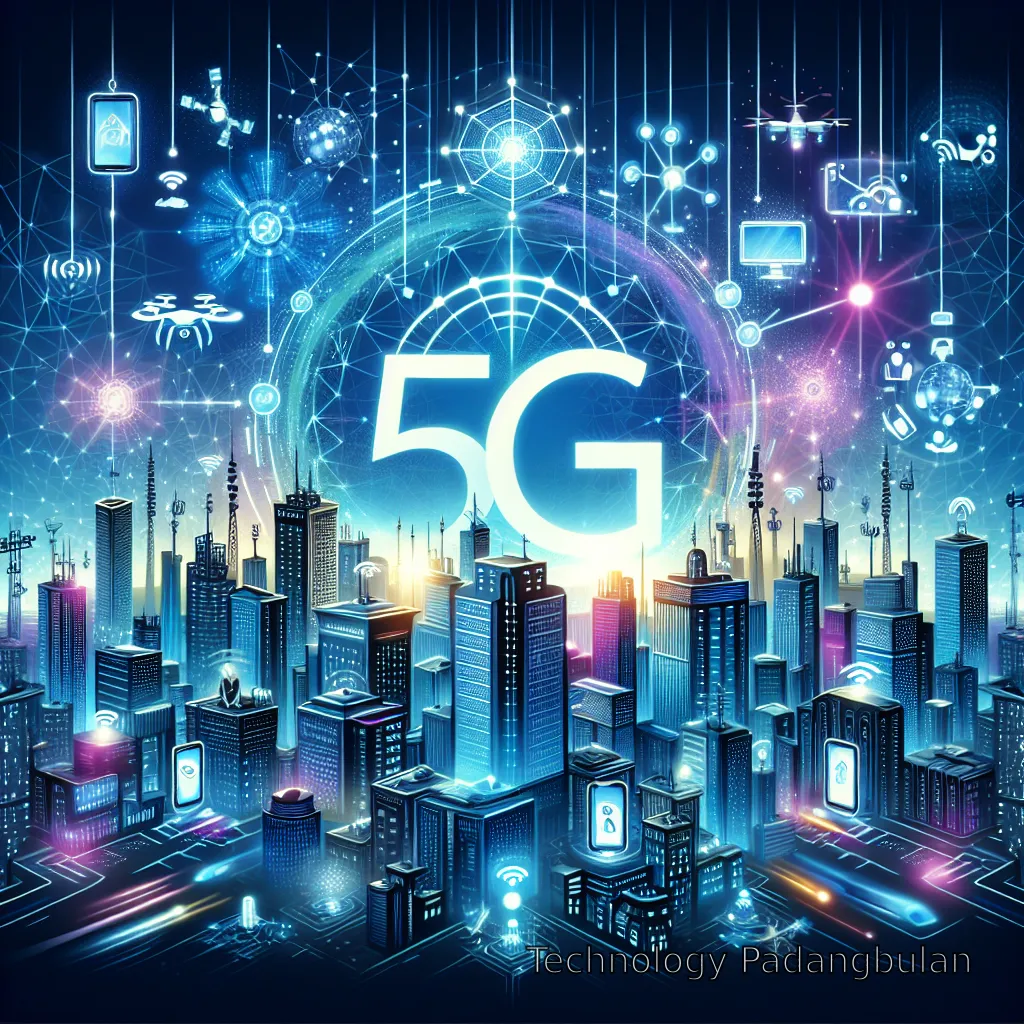
At its heart, 5G is the fifth generation of cellular mobile communication. While its predecessor, 4G LTE, brought us the mobile broadband experience we’re all familiar with, 5G takes it to a whole new level. Imagine upgrading from a quaint country road to a multi-lane, high-speed superhighway – that’s the kind of leap we’re talking about. But it’s not just about brute speed, although you’ll certainly notice those lightning-fast downloads! 5G is characterized by three main pillars: 1. **Blazing Speed (Enhanced Mobile Broadband – eMBB):** We’re talking theoretical peak speeds of up to 10 gigabits per second (Gbps) – that’s 100 times faster than 4G. Downloading an entire HD movie in seconds? That’s 5G. This speed isn’t just for bragging rights; it unlocks possibilities for high-resolution streaming, instantaneous cloud gaming, and seamless virtual experiences on the go. 2. **Ultra-Low Latency (URLLC):** This is where 5G truly flexes its muscles beyond just speed. Latency is the time it takes for a signal to travel from your device to the network and back. 4G has a latency of around 50-100 milliseconds. 5G aims for a mind-boggling 1 millisecond. Think about that! It’s virtually instantaneous. This ultra-responsiveness is critical for applications where even a tiny delay can have significant consequences, such as autonomous vehicles, remote surgery, or industrial automation. 3. **Massive Capacity (mMTC):** Our world is becoming increasingly connected. From smart home gadgets to industrial sensors and smart city infrastructure, billions of devices need to communicate. 5G is designed to connect a colossal number of devices simultaneously without network congestion. Picture a stadium full of people, all streaming and interacting without a hitch – that’s the kind of density 5G can handle, enabling the true potential of the Internet of Things (IoT). So, while ‘faster’ is certainly a part of the 5G story, it’s the combination of speed, responsiveness, and capacity that makes it a true technological marvel, setting the stage for innovations we can barely imagine today.
Beyond Faster Downloads: The Real Power of 5G Unlocked
Okay, so we’ve established 5G isn’t just about quicker Netflix streams (though that’s a nice perk!). Its true power lies in how these core capabilities – speed, ultra-low latency, and massive capacity – converge to create entirely new paradigms. Let’s peel back the layers and see where 5G truly shines. ### Unleashing Immersive Experiences: VR and AR on Steroids One of the most exciting frontiers for 5G is in the realm of immersive technologies. Imagine stepping into a fully realized virtual world or having digital information seamlessly layered onto your real-world view. This isn’t just science fiction anymore, and 5G is the accelerant. With its low latency and high bandwidth, 5G dramatically improves the performance of [virtual reality headsets] and makes highly interactive [augmented reality apps] not just possible, but incredibly fluid and responsive. No more motion sickness from laggy visuals; instead, prepare for truly engaging, real-time experiences, whether you’re gaming, training, or collaborating remotely. This means richer graphics, less lag, and a more convincing sense of presence in digital environments, pushing the boundaries of what these technologies can deliver today.
Read also : virtual reality headsets
The Smart Revolution: AI, IoT, and Flexible Futures
5G isn’t just about human-to-human communication; it’s about connecting *everything* in a smart, efficient ecosystem. ### AI on the Edge: Smarter Devices, Instantly The marriage of 5G and artificial intelligence (AI) is a match made in technological heaven. While powerful AI processing often happens in the cloud, 5G’s low latency allows for ‘edge computing’ – bringing AI processing closer to the source of the data. This means that AI in mobile devices can become incredibly responsive, performing complex tasks with near-instantaneous results without needing to send all data to a distant server and wait. Think about real-time language translation, advanced facial recognition, or even highly sophisticated on-device machine learning that adapts to your habits without privacy concerns. Your phone won’t just *have* AI; it will *think* with AI, making decisions faster and more accurately. ### The Rise of a Hyper-Connected World Massive Machine-Type Communications (mMTC), one of 5G’s core pillars, is the backbone of the Internet of Things (IoT). From smart homes that anticipate your needs to smart cities that optimize traffic and resource management, 5G can handle the sheer volume of data generated by billions of interconnected sensors and devices. Imagine a world where your refrigerator orders groceries, your car communicates with traffic lights to avoid congestion, and your smart garden waters itself based on real-time weather data. This isn’t just convenience; it’s about creating more efficient, sustainable, and responsive environments. ### Beyond the Rectangle: The Dawn of Flexible Displays As 5G rolls out, it’s not just our networks evolving, but our devices too. The incredible bandwidth and low latency of 5G are perfectly suited for devices with cutting-edge form factors, such as those leveraging flexible display technology. Imagine phones that fold out into tablets, or even rollable screens that offer vast viewing areas yet fit snugly in your pocket. These innovations in hardware will fully unlock the potential of 5G services, allowing us to interact with rich media, holographic content, and immersive applications in ways that rigid, flat screens simply can’t accommodate. The future of gadgets is sleek, adaptable, and incredibly powerful, thanks in part to the capabilities of 5G. ### A Glimpse into the Quantum Future While still largely theoretical for consumer devices, 5G also lays groundwork for future innovations like quantum computing mobile applications. Although true quantum computers are massive and require extreme conditions, the underlying principles of distributed computing and hyper-fast, secure data transfer that 5G enables could eventually facilitate a world where even complex quantum computations are accessible on a mobile scale, perhaps through cloud-based quantum services. It’s a distant dream, but 5G is building the high-speed, secure pathways that such futuristic technologies would inevitably demand.
Addressing Common Concerns: Is 5G Technology Safe?
Whenever a new technology emerges, especially one involving radio waves, questions about its safety are natural and important. 5G Technology is no exception, and there’s been a fair bit of discussion and misinformation circulating. So, let’s address the elephant in the room: is 5G safe for our health? The scientific consensus from leading health organizations worldwide is clear: there is no credible evidence that 5G, operating within international guidelines, poses a threat to human health. 5G operates using radiofrequency (RF) electromagnetic fields (EMF), similar to 4G, 3G, Wi-Fi, and even radio and TV broadcasts. These are non-ionizing waves, meaning they don’t have enough energy to damage DNA or cells directly, unlike X-rays or gamma rays. International bodies like the World Health Organization (WHO) have extensively reviewed scientific literature on EMF exposure from mobile technologies. They conclude that, based on current research, there are no adverse health effects established from exposure to RF fields at levels below the limits set by international guidelines, which 5G networks adhere to. These guidelines are set with significant safety margins to protect the public. Think of it like sunlight – a little bit is fine and even beneficial, but too much can be harmful. Regulators ensure that our exposure remains well within safe limits. While some smaller studies or anecdotal reports might raise concerns, these are often not peer-reviewed, lack robust methodology, or have not been replicated by the wider scientific community. It’s crucial to rely on the consensus of major health authorities who conduct thorough, long-term research. So, for now, you can enjoy your lightning-fast 5G connection with peace of mind, knowing that the scientific community is diligently monitoring and researching the technology.
Read also : augmented reality apps
The Road Ahead: Challenges and Opportunities
Deploying 5G isn’t like flipping a switch; it’s a massive undertaking. One of the biggest challenges is the extensive infrastructure build-out. 5G often relies on ‘small cells’ – smaller base stations that need to be deployed closer together than 4G towers, especially for millimeter-wave (mmWave) frequencies, which offer incredible speed but have a shorter range and struggle to penetrate buildings. This requires significant investment, planning, and coordination. Moreover, securing the global supply chain for 5G equipment and addressing cybersecurity concerns are paramount. However, the opportunities far outweigh the hurdles. 5G is more than just a network upgrade; it’s a platform for innovation. We’re talking about new business models emerging from enhanced IoT, the transformation of industries like manufacturing and healthcare through private 5G networks, and the creation of entirely new digital services. Smart cities, connected cars, remote education, and advanced telehealth are just a few examples of how 5G will drive economic growth and improve quality of life globally. The journey to a fully 5G-enabled world will be gradual, but the destination promises a future of unparalleled connectivity and innovation.
Conclusion
From ultra-fast downloads to enabling the next generation of [virtual reality headsets] and fostering smarter cities powered by [AI in mobile devices], 5G Technology is far more than just an incremental upgrade. It’s the digital bedrock for an interconnected, intelligent, and highly responsive future. While there are challenges in its global deployment and valid questions about safety, the scientific community and leading organizations have provided clear guidance, allowing us to embrace its potential with confidence. So, as your smartphone icons zip through updates and your streaming content loads instantly, remember that you’re not just experiencing a faster internet; you’re witnessing the dawn of a new era in mobile technology, one that promises to redefine how we live, work, and play. The future is connected, and 5G is leading the charge!
References
FAQ
What is the biggest difference between 5G and 4G?
While 4G brought mobile broadband, 5G significantly surpasses it in three key areas: speed (up to 100x faster), latency (down to 1 millisecond compared to 50-100ms for 4G), and capacity (connecting millions more devices per square kilometer). This combination enables entirely new applications beyond just faster phone browsing.
Will 5G replace Wi-Fi?
Not entirely. 5G and Wi-Fi (especially Wi-Fi 6 and 7) are complementary technologies. 5G excels at providing high-speed, low-latency connectivity over wide areas for mobile devices, while Wi-Fi typically offers cost-effective, high-bandwidth local area networking within homes and offices. They will likely coexist and even integrate more closely to offer seamless connectivity.
Is my current phone compatible with 5G?
No, you need a 5G-enabled smartphone to connect to a 5G network. These phones contain specific 5G modems and antennas designed to receive and transmit 5G signals. Many newer flagship and mid-range smartphones released in the last few years are 5G-compatible.
What are ‘small cells’ in 5G, and why are they needed?
Small cells are compact base stations that are much smaller than traditional cell towers. They are crucial for 5G, especially for millimeter-wave (mmWave) frequencies, because these higher frequencies offer immense speed but have a shorter range and can be easily blocked by obstacles. Small cells are deployed closer together, often on lampposts or buildings, to provide robust, high-speed coverage.
How will 5G impact autonomous vehicles?
5G’s ultra-low latency and high reliability are critical for autonomous vehicles. It enables Vehicle-to-Everything (V2X) communication, allowing cars to communicate almost instantly with other vehicles, traffic lights, road infrastructure, and pedestrians. This real-time data exchange is vital for navigation, collision avoidance, and coordinating traffic flow, making self-driving cars safer and more efficient.
Can 5G help with remote work and education?
Absolutely! 5G’s high speeds and low latency can significantly enhance remote work and education. It allows for seamless high-definition video conferencing, rapid file transfers, and access to cloud-based applications without lag. For education, it enables interactive virtual classrooms, immersive learning experiences, and access to rich online resources, bridging digital divides in many areas.
